

News & Events
Ethical considerations concerning laser medicine
Christian Raulin, M.D.; Baerbel Greve, M.D.; Sabine Raulin, M.D.
In 1996 approximately 1 million cosmetic laser treatments were performed; the estimated projection for 2000 is 3.4 million. The turnover for photoepilation systems alone has increased from 85 million dollars in 1997 to 185 million dollars in 1999 (1).There is hardly any other therapy that bears the weight of such high expectations on the part of patients and physicians; no other medical procedure enjoys such fascination and attention. In the course of this trend, basic reflections about medical ethics are increasingly overlooked.
Lasers and media:
Never before have demand and supply within a field of medicine been so strongly influenced by the media. Among the public at large, the thought of "lasers" and "laser beams" inspires visions of painless, long-term healing, as well as the promise of attaining beautiful and smooth skin with greater speed and less effort than ever before.
Although patients generally respond quite critically to the thought of radiation and x-rays, the "radiation" of laser beams seems to them to be harmless, almost as if lasers had magical powers. Laser companies, tattoo and cosmetic studios as well as self-proclaimed "laser institutes" promote their work with full-page advertisements in newspapers and lifestyle magazines.
Well-founded scientific studies are no longer the basis for the wide-spread use of lasers. Careful clinical assessment cannot occur under such conditions, and the absolute opposite of the Hippocratic Oath to do no damage can easily be achieved.
Economics and marketing:
The massive public interest and the patient's demand for laser treatment regardless of the indication have led many physicians to follow the booming trend and acquire a laser (2). In these days of tight budgets, it is implied that lasers provide powerful sources of additional income outside of the field of managed care.
The costs of acquiring and operating a laser are enormous. The "right" laser must be chosen from a wide selection which is as varied as can be. There is no "universal laser" that will work for every physician or even for a given set of indications. Once the technical equipment has been purchased, it must be used often, even if alternative methods of treatment may be equally efficient and perhaps even much more economical.
Consequently, there is an increased risk of creating new uses for application even when safe and more effective forms of therapy already exist.
Furthermore, laser systems are often outdated within a very short time; technical developments in this field take place at the proverbial speed of light. Before the first payment has been made, there are already better, higher-performance alternatives which are often more expensive than the earlier models (2, 3-4).
Leasing or renting lasers by the day -- a practice which some physicians or clinics employ so as to have access to the lasers they need -- is not necessarily as practical as it seems. Careful planning and coordination is required to juggle appointments, follow-up patient visits, and any waiting periods that may ensue from equipment maintenance or scheduling problems. At the same time, a minimum number of patients per "laser day" must be treated, which may lead to a rather liberal diagnosis of indications.
It is not uncommon for the industry to advertise newly developed lasers for which the efficacy has not been determined by means of objective, randomized trials. When a laser is first marketed, there are thus no dependable data available from studies; instead, physicians must rely upon the often unfounded claims from the advertising literature (3).
Training and quality:
The issue of laser training is a serious problem. Anyone, including healers, hair stylists, tattoo artists, and cosmeticians, can buy lasers and then advertise for their services. There are no legal requirements for training, no quality control measures, no official quality standards or guidelines.
Gynecologists, internal medicine specialists, otorhinolaryngologists and dentists cannot be expected to be able to assess skin types and develop a feeling for iatrogenically induced damage to skin, regardless of whether the skin is healthy, diseased, old or young. In the weekend courses that are held by enterprising physicians, leasing companies or the laser industry, very little mention is made of potential complications (and their legal consequences) (5).
Instead, aspects of "creative marketing strategies" are emphasized. Hands-on training is performed on apple and orange peels under the guidance of so-called "specialists".
Many private practices and clinics do not have what they need to adequately manage the logistics involved in skin resurfacing or in treating large port-wine stains and all that this can entail (which may include administering general anesthesia or sedating the patient) (2). The experience of a physician and his or her assistants is a significant factor when it comes to the successful follow-up treatment of skin that may be extensively damaged.
Laser treatment of the skin should thus only be conducted in compliance with dermatological standards (6). This would necessitate undergoing specialist laser training and fulfilling the appropriate minimum standards for equipment, hygiene, facilities, and personnel.
Ethics and esthetics:
In laser treatment the focus is often no longer on objective symptoms or evidence of disease; instead it is on wrinkles, pigmentation or hairs which are subjectively perceived as disturbing on otherwise healthy skin. It is not primarily diseased skin which is treated; rather, it is healthy skin which is injured upon the request of the patient, and this process does not improve the prognosis or symptoms. Unlike plastic surgery, which can correct deformities or the after-effects of accidents, cosmetic medicine treats the patients' subjective self-image. Therapeutic success is not a question of restoring and maintaining health; but of happiness and contentment (7, 8).
The inevitable conclusion is that the happiness of the patient, which is of course subjective, becomes the center of medical attention, as opposed to the goal of restoring and maintaining health in the Hippocratic sense.
If the patient -- the "client" -- determines a physician's behavior, physicians and patients become objects of a business transaction; the doctor becomes a merchant. Business partners are motivated only by a sense of their own needs. This sort of economic relationship between physicians and patients, however, involves a fine line; there is an inherent lack of equilibrium in such situations, both because of the physician's greater knowledge of medicine, and because of the responsibility physicians bear towards patients as individuals who are entitled to special protection and confidentiality (9).
If financial pressure coerces physicians into treating patients using lasers against their better knowledge or judgment, they will sell their souls to cosmetics and commerce. The Ethics Committee of the American College of Physicians calls for severe restrictions and clear-cut regulations concerning the sale of goods in private practices (10); these guidelines can also be applied to the "sale" of laser treatment.
Conclusion:
We must demand the extensive scientific evaluation of new and existing systems; objective and trustworthy marketing by laser manufacturer; well-founded training for laser operators; and legislation which restricts the use of lasers to physicians alone. Let us recall the statement of one of laser medicine's pioneers, Leon Goldman: "If you don’t need the laser, don’t use it" (11).
(for references please contact authors)

Want a New Career?
The American Institute of Education can put you on the fast track to a rewarding career. Stop dreaming about it and make it happen at AIE!
Want to learn more? Read Why Become An Electrologist to see why AIE's electrology program is right for you!
Electrology Program
AIE'S ELECTROLOGY PROGRAM is right for you!
The American Institute of Education can put you on the fast track to a rewarding career as a licensed electrologist.
Stop dreaming about it and make it happen at AIE!
Want to learn more? Read Why Become An Electrologist to see why AIE's electrology program is right for you!
In just four months, you could be earning $70 to $130 per hour and working whenever and wherever you want. AIE's Electrology Program can make it yours.
Electrolysis Reimagined
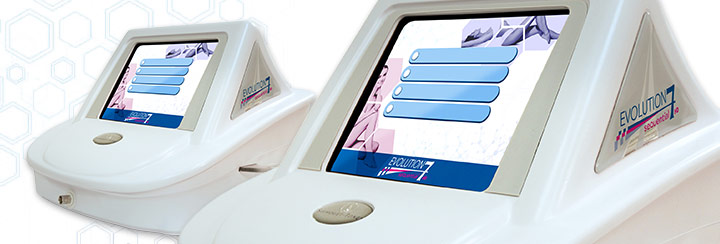
For many years those of us associated with electrolysis understood that epilators operated at a frequency of 13.5 megahertz. About twelve years ago Dectro International introduced its Platinum line of epilators that operate at 27 MHz. Our horizons were expanded. Their claim is that hair is permanently removed 25% faster and with a degree of comfort previously unheard of. So what are we to make of an epilator that operates at 6.68 MHz?
Meet the Graduates

At the American Institute of Education, we let our electrolysis graduates speak for us! Our state-of-the-art training leads to exciting, financially rewarding careers. Our graduates are some of the most sought after electrologists in the market.
Testimonials
I really loved school at American Institute of Education and I selected it because I heard it was the best program. The experience was amazing even from the first phone call with Ron where tuition, scholarships, program hours flexibility, online access, and timely information is all top notch. The curriculum is national standard and includes all the latest and greatest topics that are hot in the industry.
- Russ Cameron, owner/manager
Skin Sensations in Las Vegas
Follow AIE Electrology!
Connect with us on Facebook:
@electrologyschool
© 2026 American Institute of Education All Rights Reserved. Built By FENCL WEB DESIGN

Phone: 888-844-4247
Fax: 714-486-1380
Email:
Facebook
Accessibility Statement

SHARE