

News & Events
Near-Infrared Laser Light of High Energy and Ultrashort Pulse Genetically-Induces Response Genes in the DNA Repair and Apoptosis Regulatory Pathways.
Life Sciences & Biotechnology Update
This (Air Force Academy) study shows potential human cell genetic damage from laser light. The use of laser light for targeting devices and weapons has sharply increased the likelihood that aircrew and support personnel will be exposed to laser light during operations.
The increased potential for exposure of humans highlights the need for scientifically-based safety standards for laser exposure at the ultra-short pulse lengths. Current safety standards are largely extrapolations of exposure limits at longer pulse lengths, using a minimal visible lesion endpoint in the Rhesus monkey retinal model. A non-animal model for assessing laser-light damage to tissue, particularly human, is quite desirous for obvious scientific, political, and fiduciary reasons.
The study assesses the sub-lethal insult to human cells, using a tissue culture system for specific genes that has been shown to be important in several biological processes that could lead to cancer or cell death. Using the CAT-Tox (Xenometrix Inc.) assay, it appears that 1064 nm nanosecond pulses of laser light is sensed, and induces several stress response genes, including p53, a gene in the DNA repair and apoptosis (cell suicide) regulatory pathways, in a dose-dependent fashion. The approach provides insight into a more global methodology for characterizing environmental stressors via genetic profiling.
(Order this LIFE SCIENCES & BIOTECHNOLOGY UPDATE reviewed report from InfoTeam Inc., P.O. Box 15640, Plantation, FL 33318-5640; Phone (954) 473-9560, Fax (954) 473-0544: Report No. L20010607; 1999, 13 pp. Price: $89.00, prepaid. E-mail to:

Want a New Career?
The American Institute of Education can put you on the fast track to a rewarding career. Stop dreaming about it and make it happen at AIE!
Want to learn more? Read Why Become An Electrologist to see why AIE's electrology program is right for you!
Electrology Program
AIE'S ELECTROLOGY PROGRAM is right for you!
The American Institute of Education can put you on the fast track to a rewarding career as a licensed electrologist.
Stop dreaming about it and make it happen at AIE!
Want to learn more? Read Why Become An Electrologist to see why AIE's electrology program is right for you!
In just four months, you could be earning $70 to $130 per hour and working whenever and wherever you want. AIE's Electrology Program can make it yours.
Electrolysis Reimagined
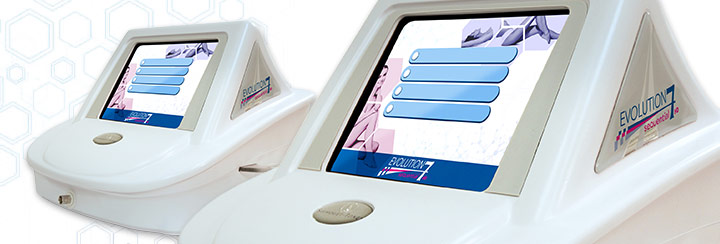
For many years those of us associated with electrolysis understood that epilators operated at a frequency of 13.5 megahertz. About twelve years ago Dectro International introduced its Platinum line of epilators that operate at 27 MHz. Our horizons were expanded. Their claim is that hair is permanently removed 25% faster and with a degree of comfort previously unheard of. So what are we to make of an epilator that operates at 6.68 MHz?
Meet the Graduates

At the American Institute of Education, we let our electrolysis graduates speak for us! Our state-of-the-art training leads to exciting, financially rewarding careers. Our graduates are some of the most sought after electrologists in the market.
Testimonials
I really loved school at American Institute of Education and I selected it because I heard it was the best program. The experience was amazing even from the first phone call with Ron where tuition, scholarships, program hours flexibility, online access, and timely information is all top notch. The curriculum is national standard and includes all the latest and greatest topics that are hot in the industry.
- Russ Cameron, owner/manager
Skin Sensations in Las Vegas
Follow AIE Electrology!
Connect with us on Facebook:
@electrologyschool
© 2026 American Institute of Education All Rights Reserved. Built By FENCL WEB DESIGN

Phone: 888-844-4247
Fax: 714-486-1380
Email:
Facebook
Accessibility Statement
SHARE